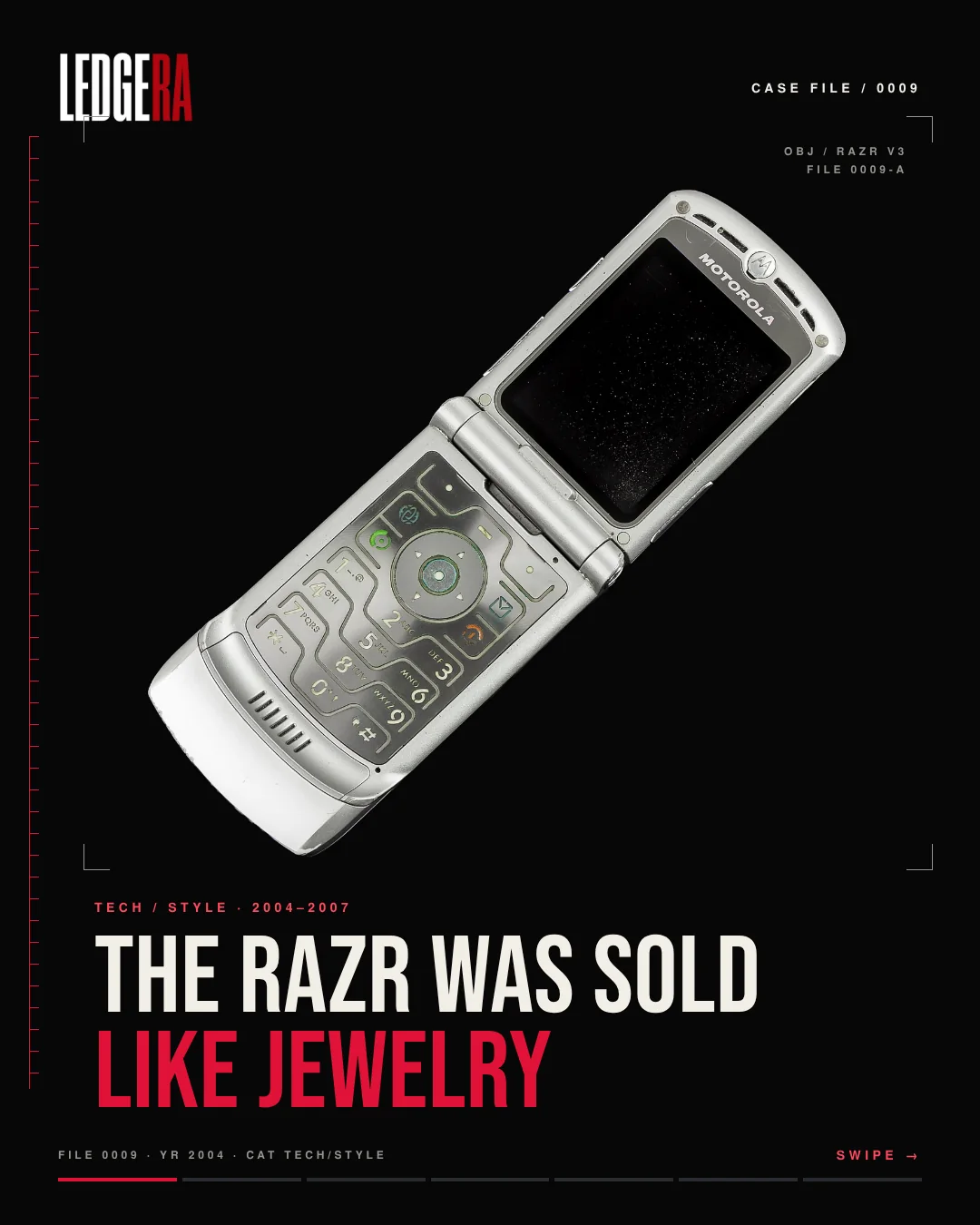
The Razr was sold like jewelry
The hook
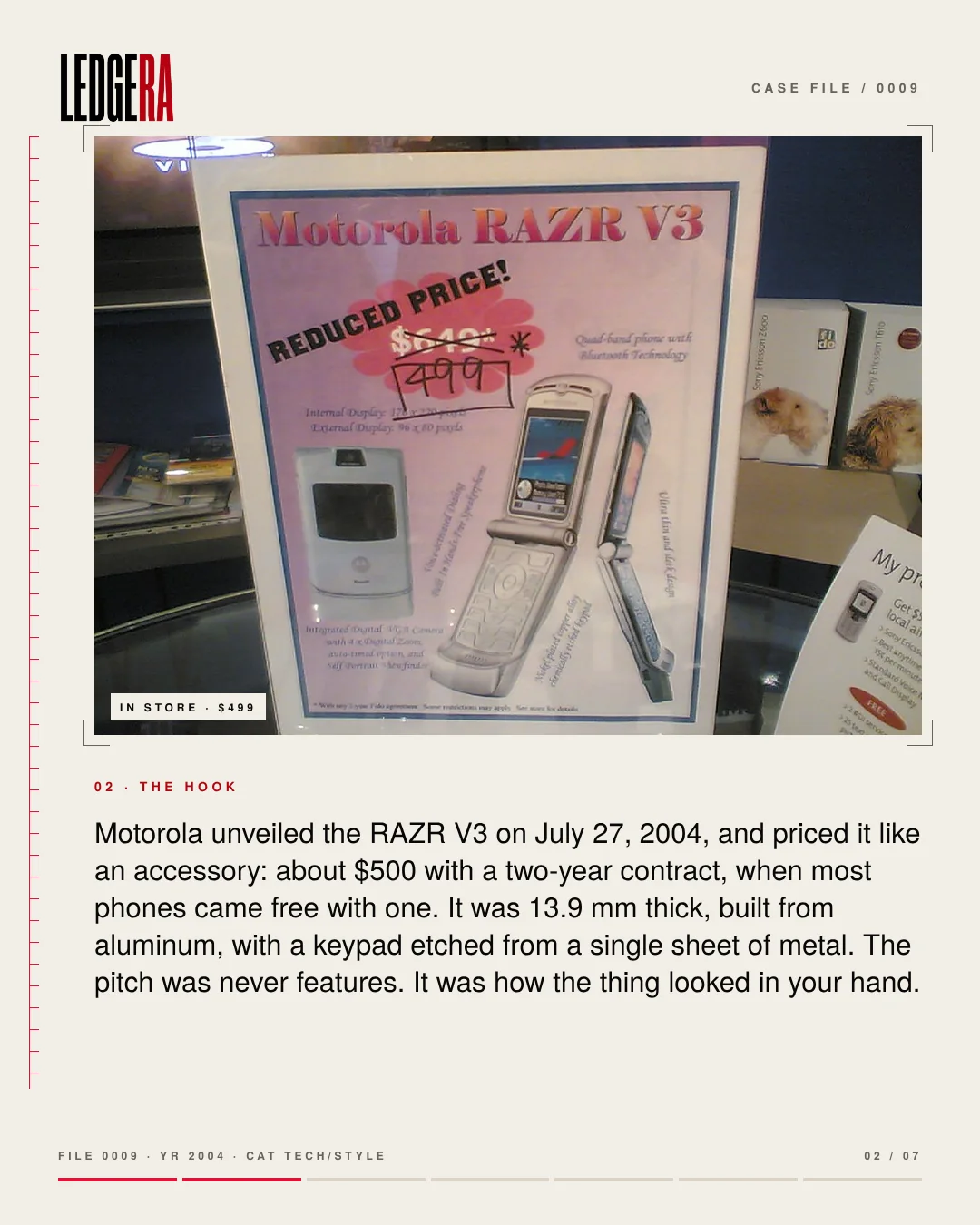
Motorola unveiled the RAZR V3 on July 27, 2004, and priced it like an accessory: about $500 with a two-year contract, when most phones came free with one. It was 13.9 mm thick, built from aluminum, with a keypad etched from a single sheet of metal. The pitch was never features. It was how the thing looked in your hand.
The Thin
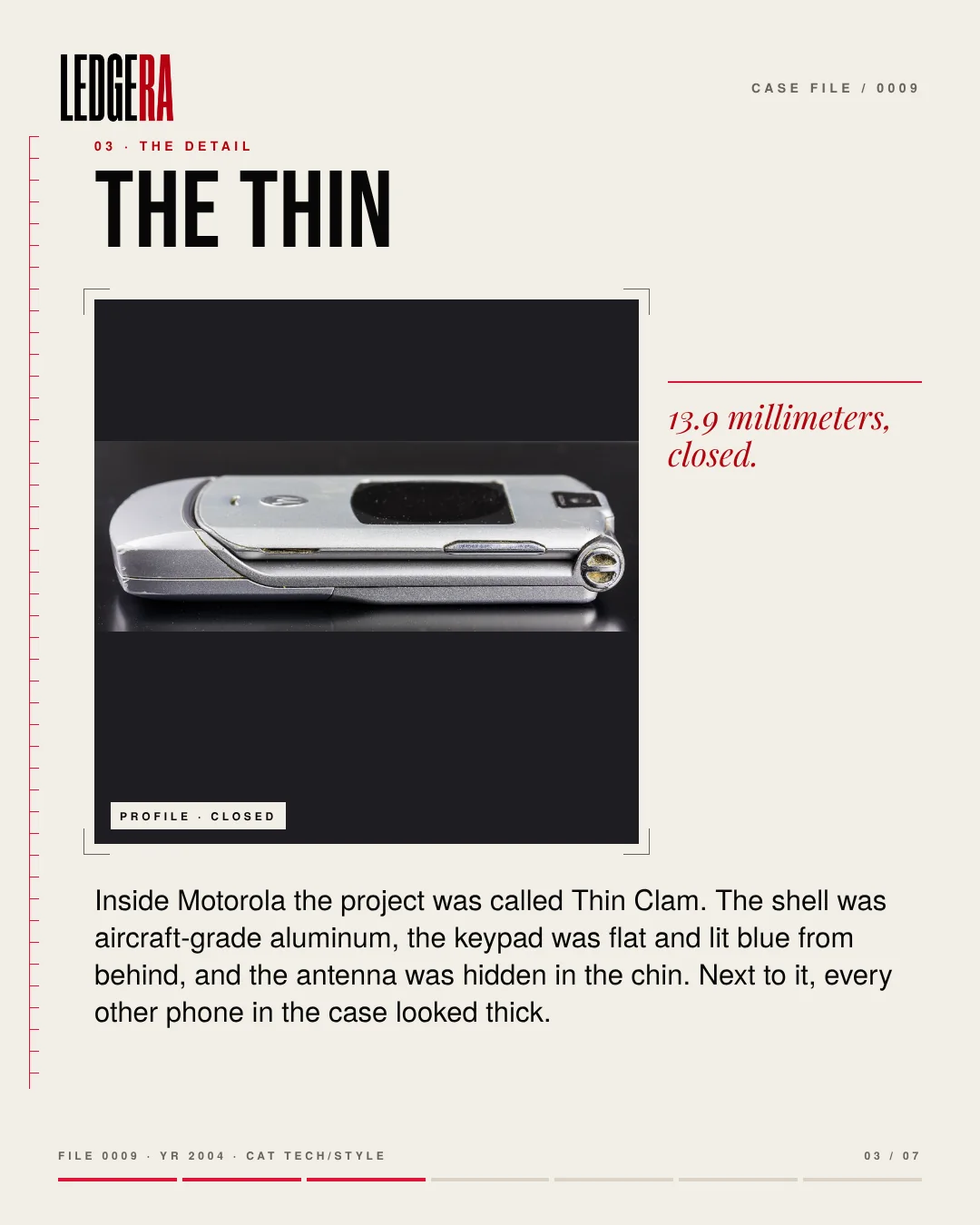
Inside Motorola the project was called Thin Clam. The shell was aircraft-grade aluminum, the keypad was flat and lit blue from behind, and the antenna was hidden in the chin. Next to it, every other phone in the case looked thick.
13.9 millimeters, closed.
What was happening
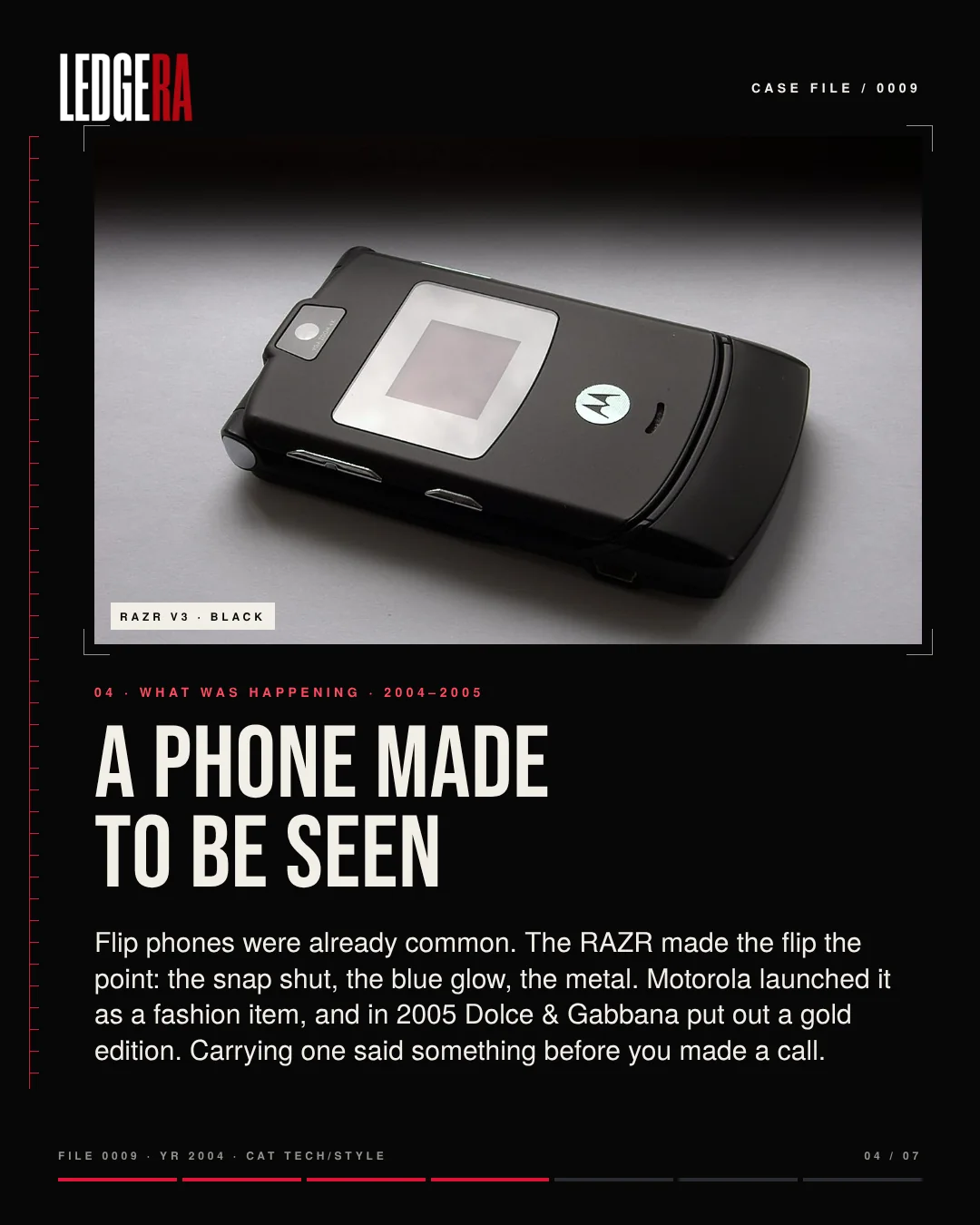
A phone made to be seen
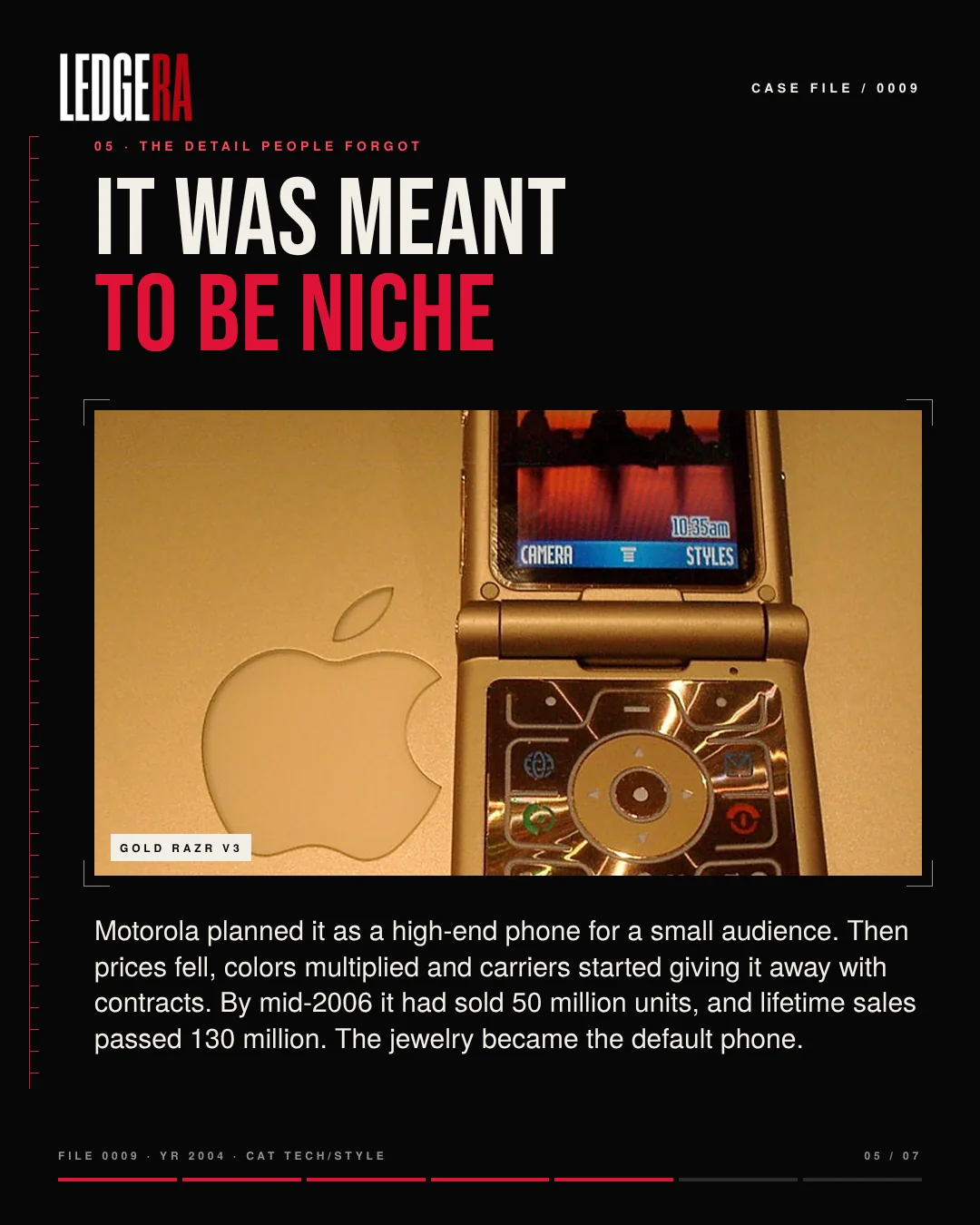
Flip phones were already common. The RAZR made the flip the point: the snap shut, the blue glow, the metal. Motorola launched it as a fashion item, and in 2005 Dolce & Gabbana put out a gold edition. Carrying one said something before you made a call.
The detail people forgot
It was meant to be niche
Motorola planned it as a high-end phone for a small audience. Then prices fell, colors multiplied and carriers started giving it away with contracts. By mid-2006 it had sold 50 million units, and lifetime sales passed 130 million. The jewelry became the default phone.
Why it matters now
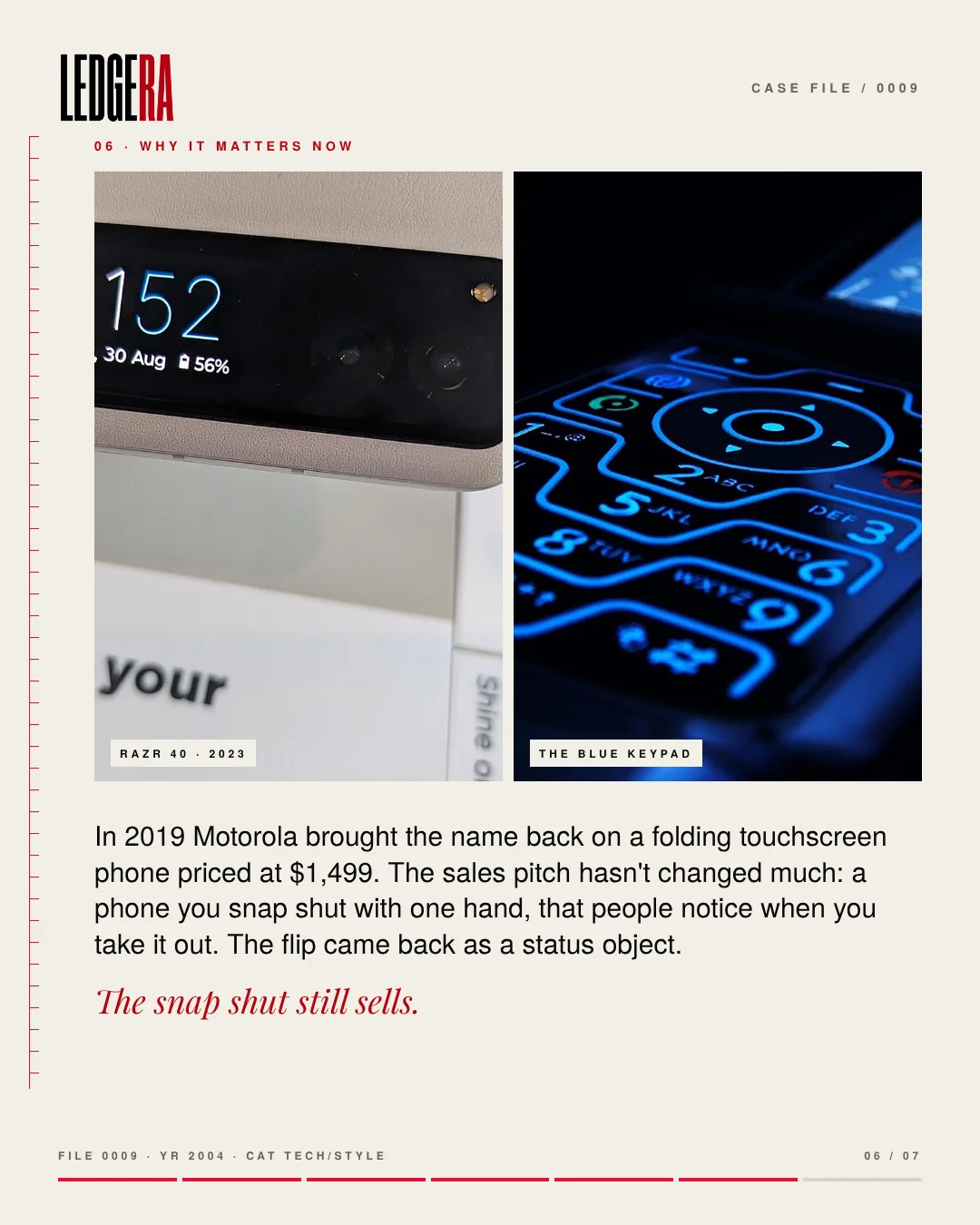
In 2019 Motorola brought the name back on a folding touchscreen phone priced at $1,499. The sales pitch hasn't changed much: a phone you snap shut with one hand, that people notice when you take it out. The flip came back as a status object.
The snap shut still sells.
Words: LEDGERA Editorial.