Some concerts you watch. Others you carry home with you. YE LIVE! was the second kind: emotional, beautiful, nostalgic, and, by the end of the night, unmistakably history in the making.
You feel a stadium show before you hear it. Tens of thousands of people settle into a single pressure system of voices, phone lights and nerves, all waiting on one question that has followed Ye for years: which version of him is going to walk out?

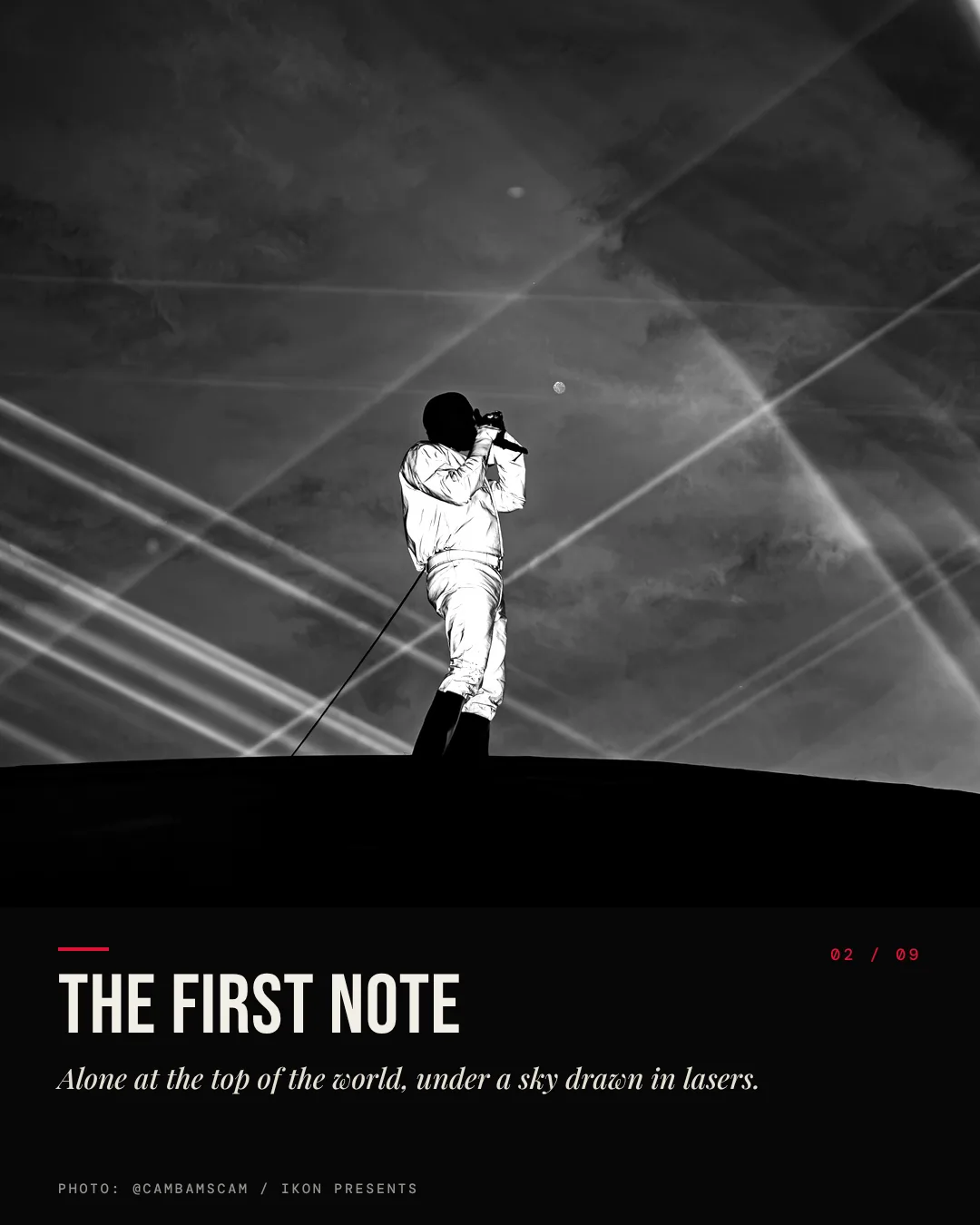
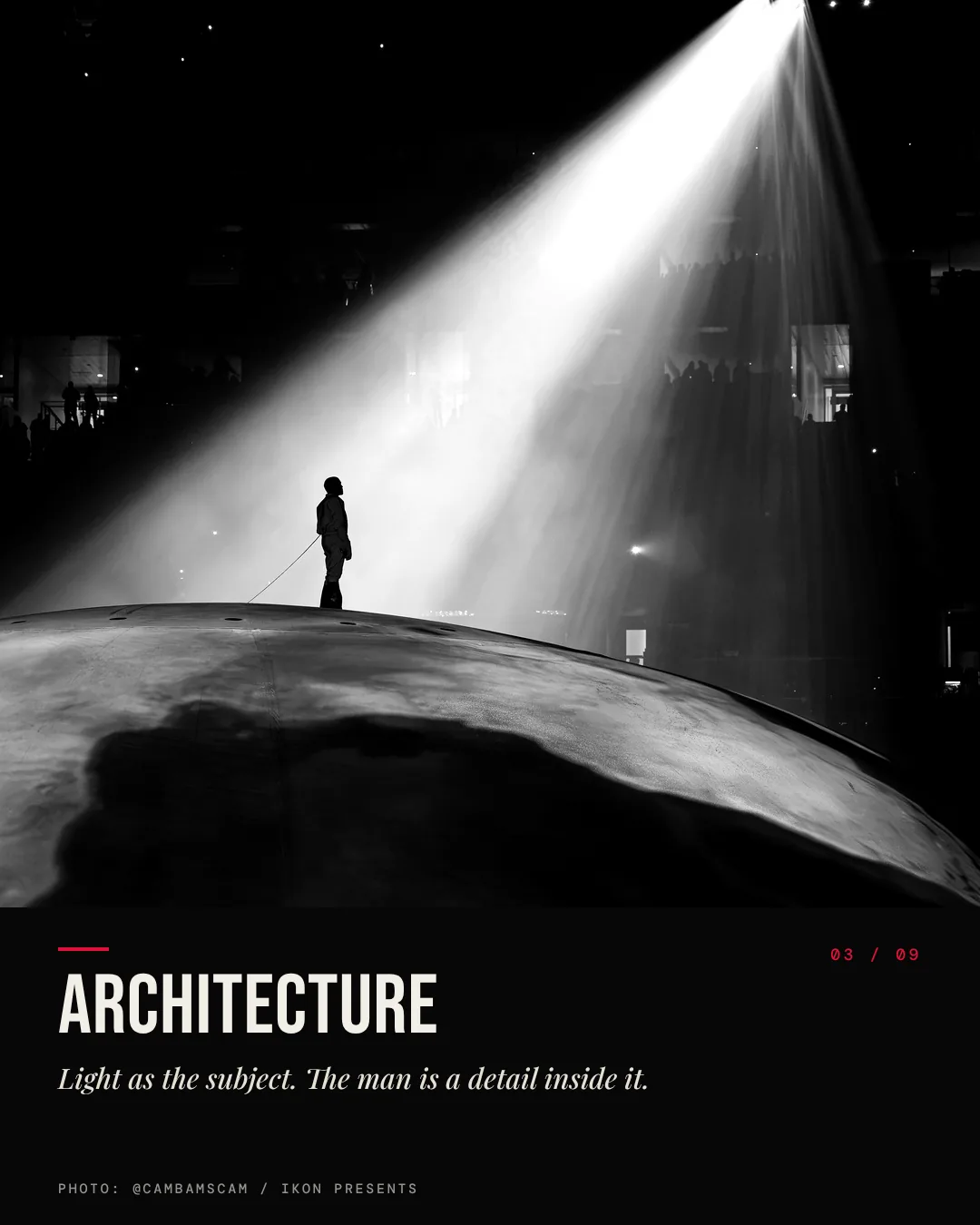
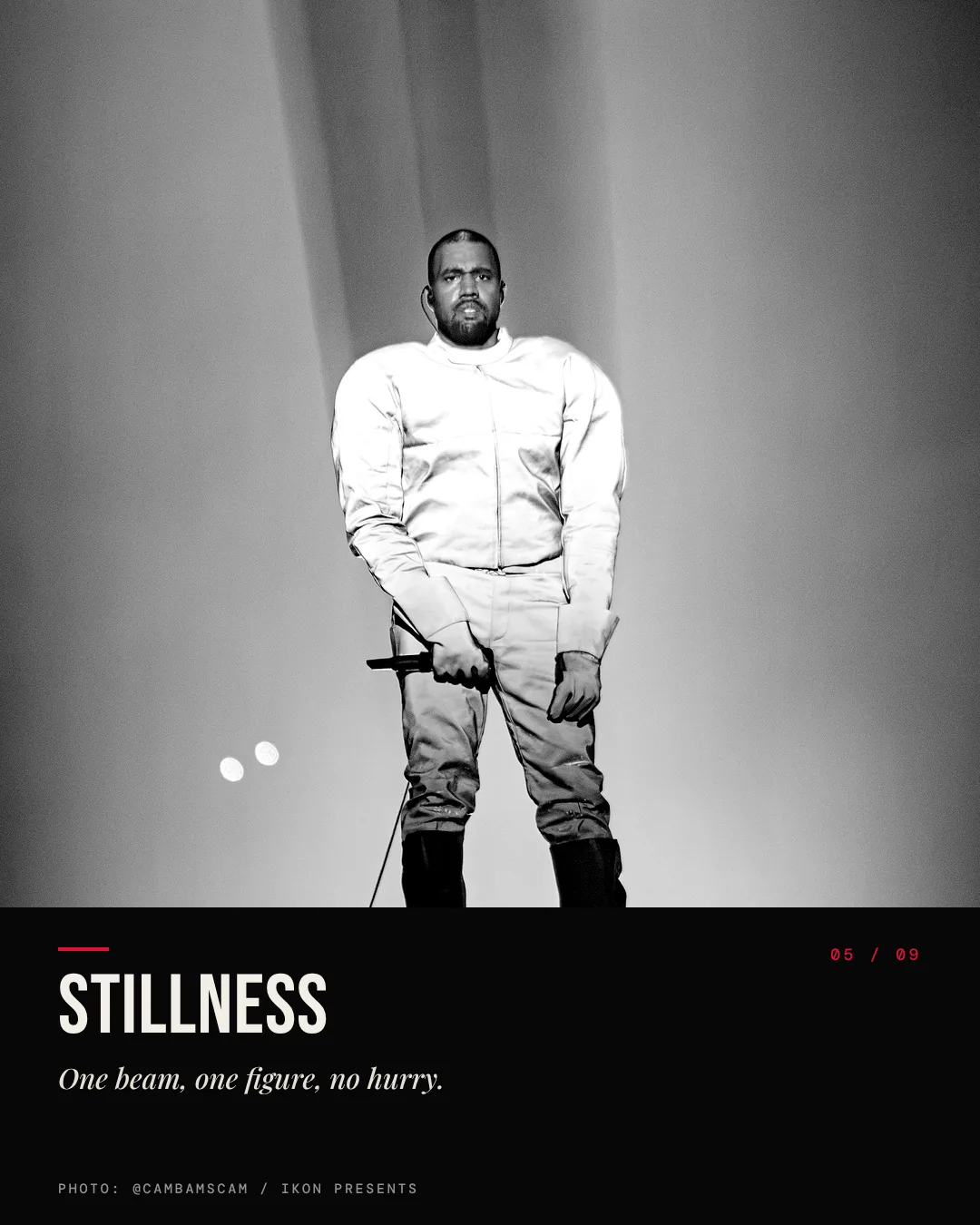
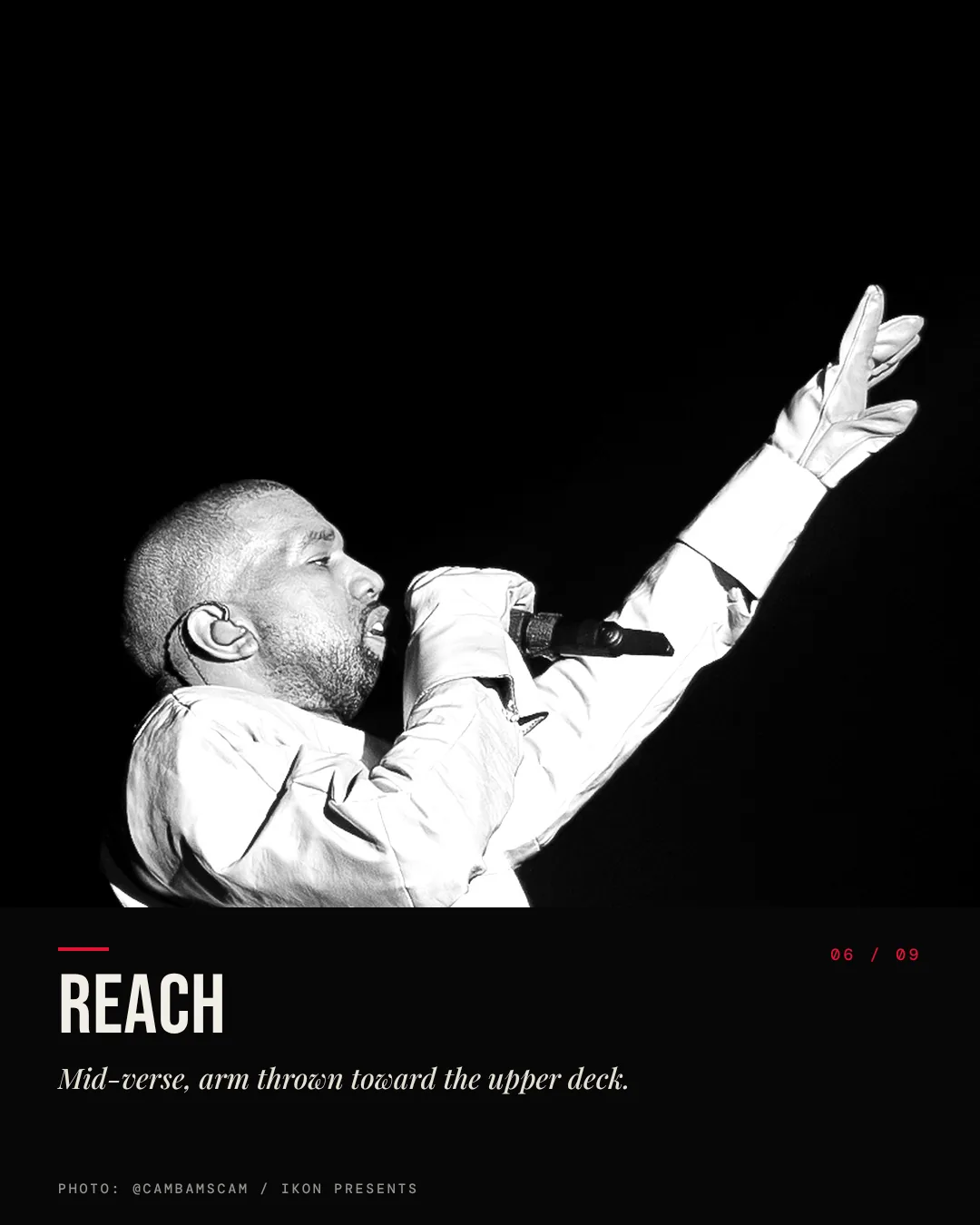
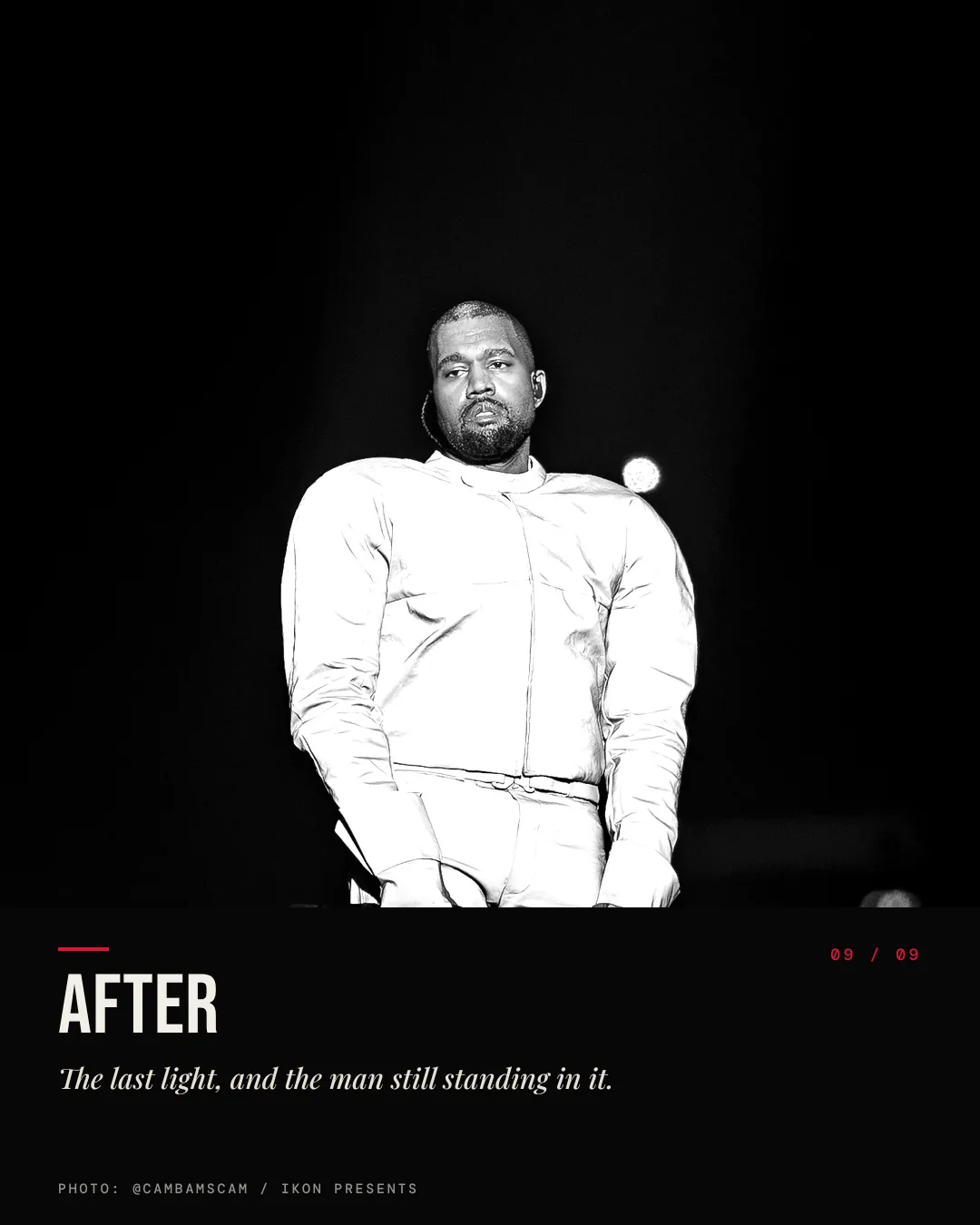
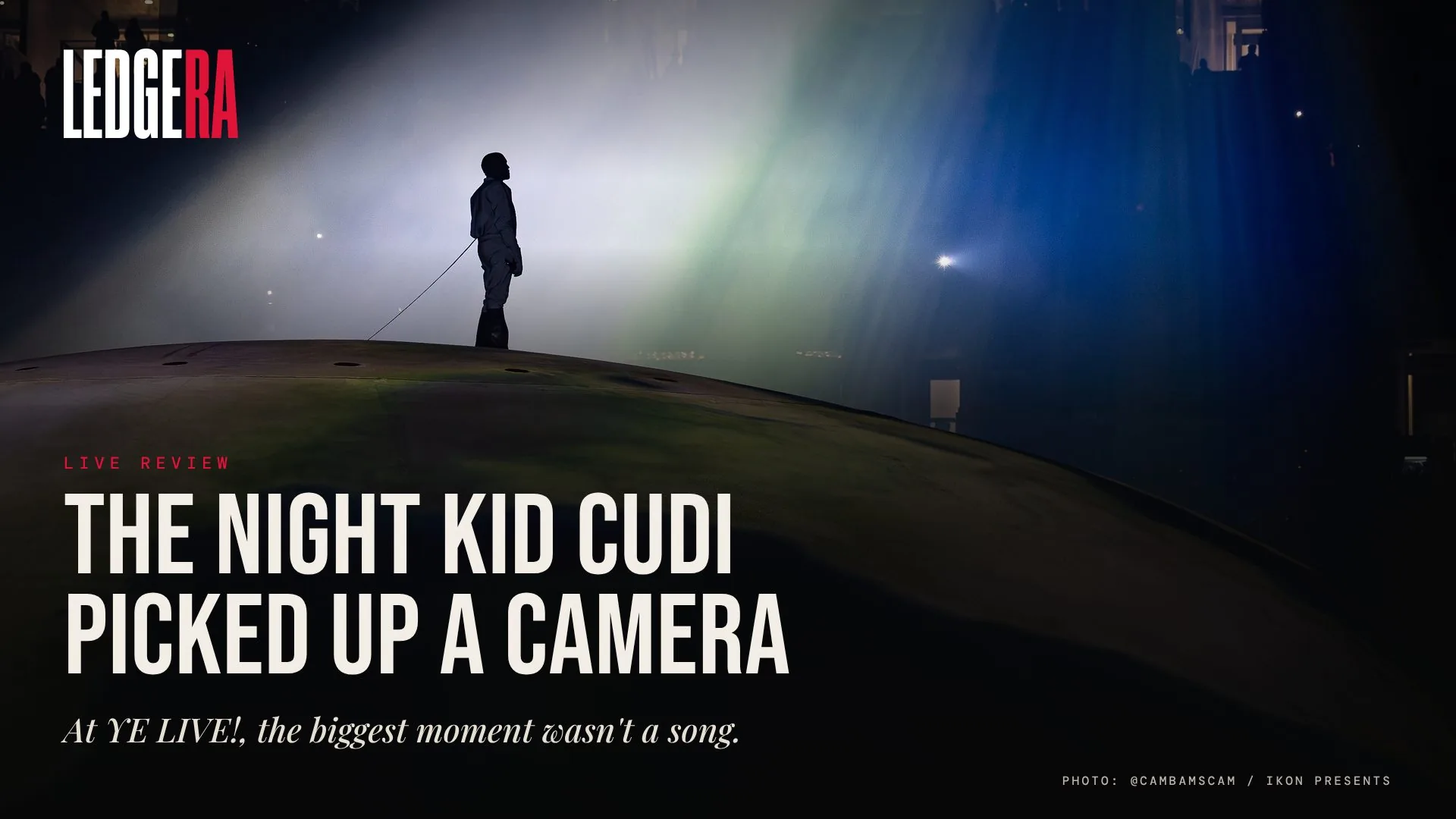
He has never been interested in settling that question, and he didn't here. The man who appeared onstage wasn't selling redemption or apology. He was selling presence, the oldest commodity in live music and the hardest to fake at this size. Dressed in pale, utilitarian white, he spent much of the night alone atop an enormous globe, a single figure on top of the world, swallowed and then revealed by walls of light.
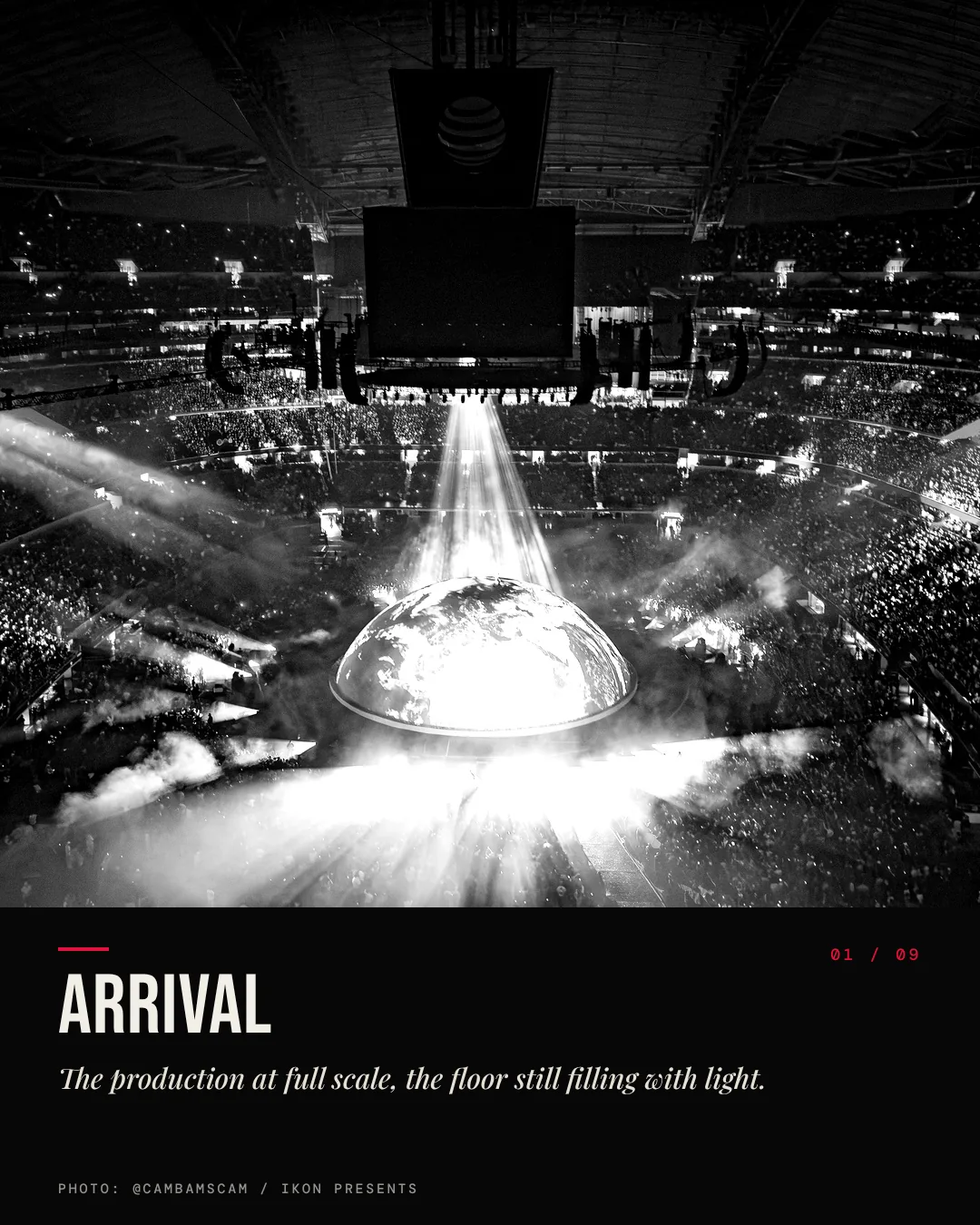
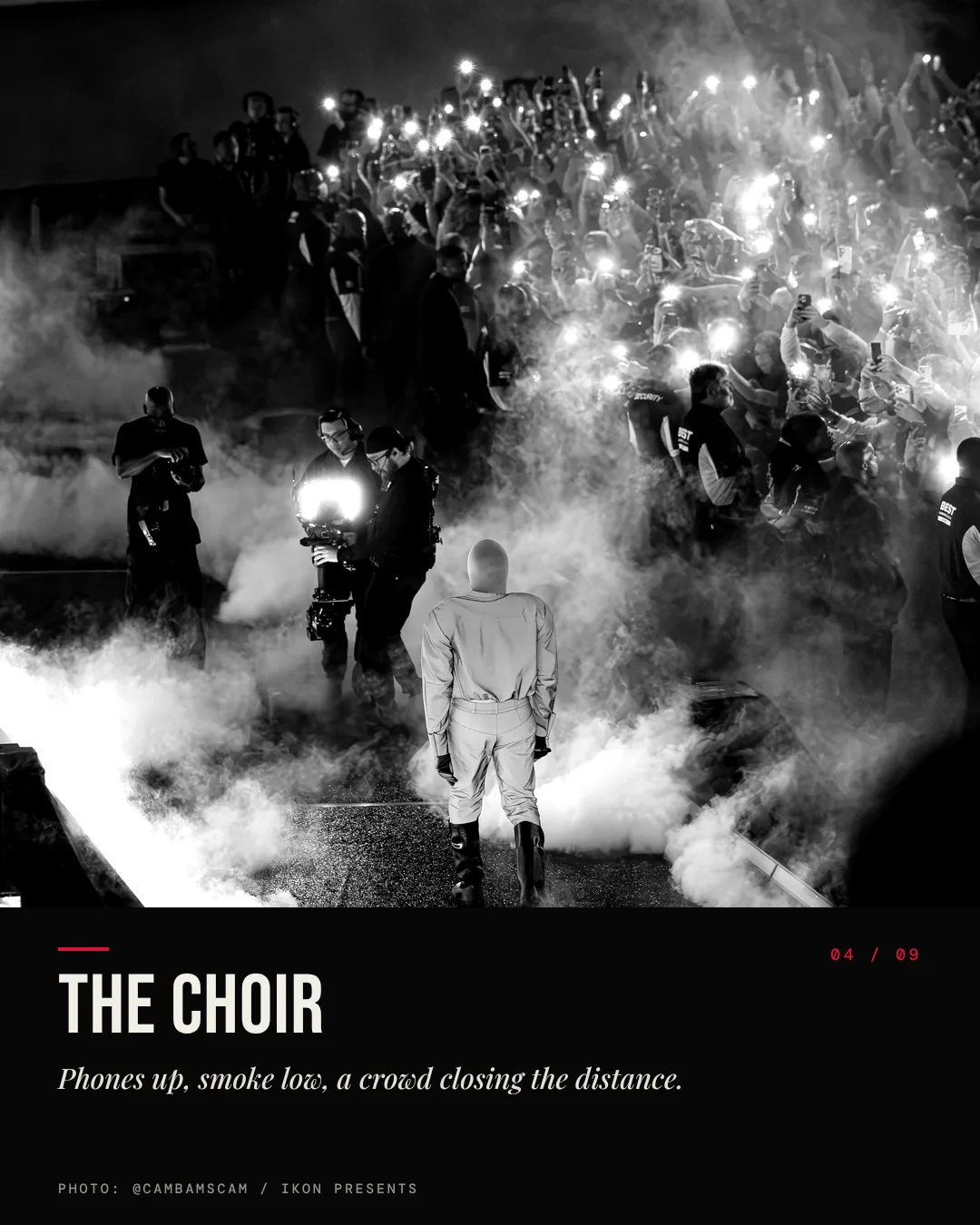
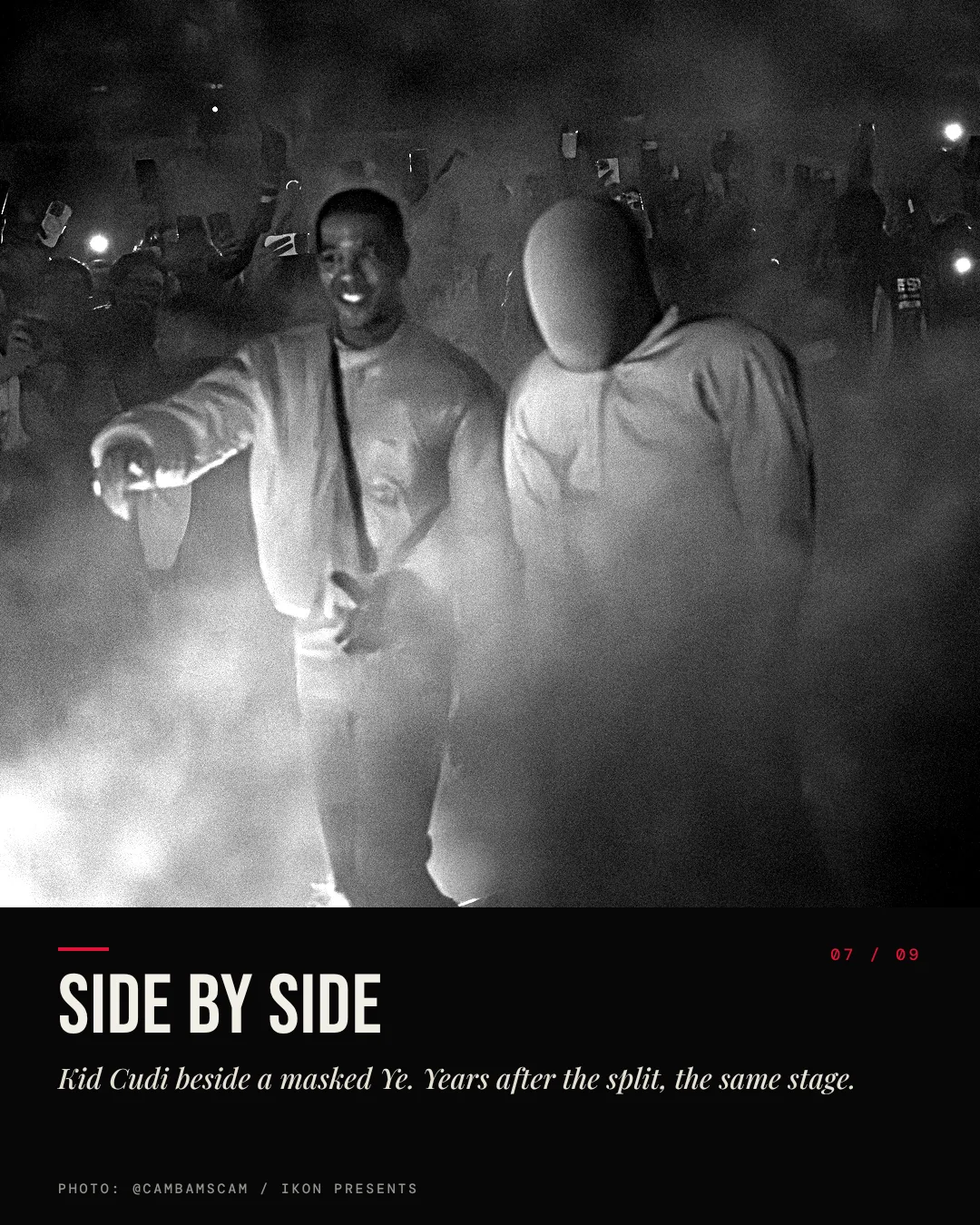
There is a particular grammar to a Ye show, and it has never been the grammar of a typical rap concert. The production isn't decoration; it's the argument. Lasers cut the air into cathedral ceilings. Spotlights fell like beams through clouds. Smoke rolled across the floor while a sea of phones lit up the dark. Fire rose from the edges of the stage. And beneath all of it, the catalog arrived as a series of eras rather than a playlist, each one landing on someone's memory. That was where the nostalgia hit hardest: not in any single song, but in looking around and seeing a stadium full of people reliving the years those records soundtracked.
Then the night started to open up.
The First Door: Erykah Badu
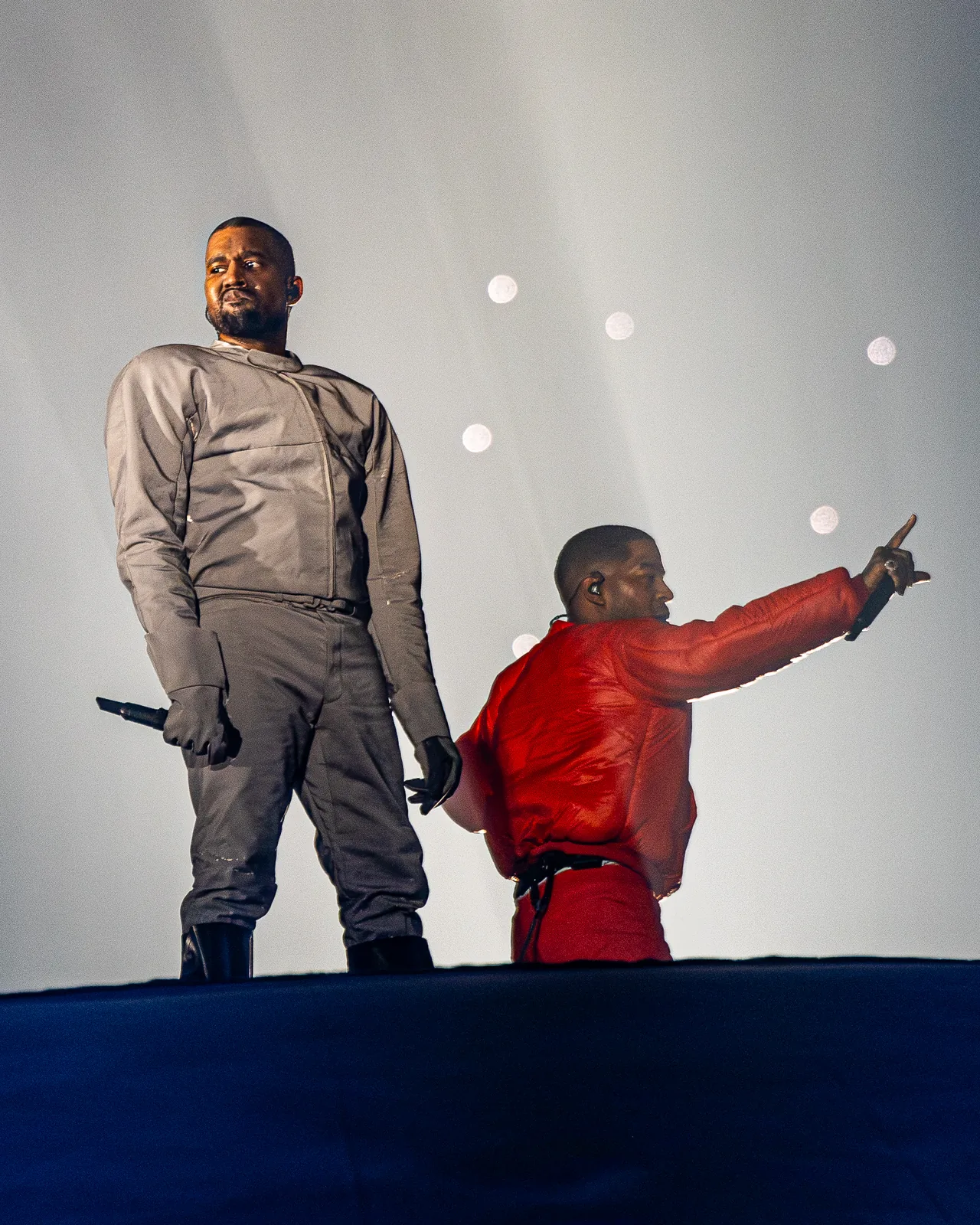
When Erykah Badu stepped out, the temperature changed. Badu has always been a performer who makes enormous spaces feel intimate, and she did it here at a scale that should have made that impossible. Her set wasn't a cameo bolted onto someone else's show. It was a reminder that one of neo-soul's architects still commands any room on her own terms, and that Ye, for all his maximalism, has always understood the power of a voice that doesn't need to shout.
Her appearance set the tone for what came next. This was going to be a night about lineage, and about who stands next to whom.
The Center of Gravity: Kid Cudi
Nobody needed a press release to know what Kid Cudi's arrival meant. The roar told you.
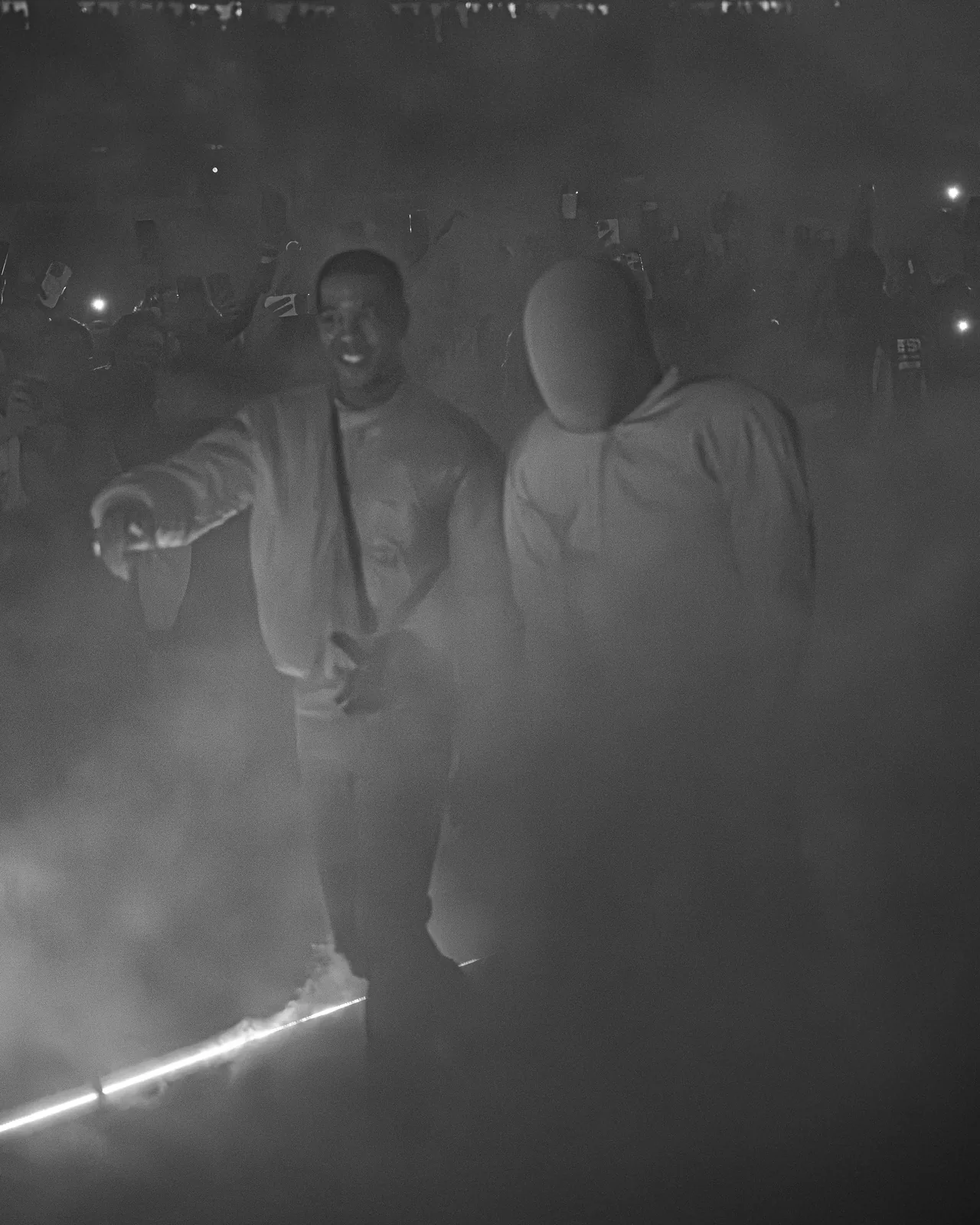
To understand that roar, you have to understand the history. Ye and Cudi made some of the most emotionally honest music either has ever released, culminating in Kids See Ghosts, a record about pain and survival that a generation of listeners treated as a lifeline. Then came the public fracture, the kind of split fans assume is permanent because it played out in public. Reunions like this are usually negotiated, staged and announced. This one landed like a rumor confirmed in real time. Seeing them share a stage again, Cudi grinning beside a masked Ye, was the most emotional stretch of the night.
And then Cudi did something no one choreographs.
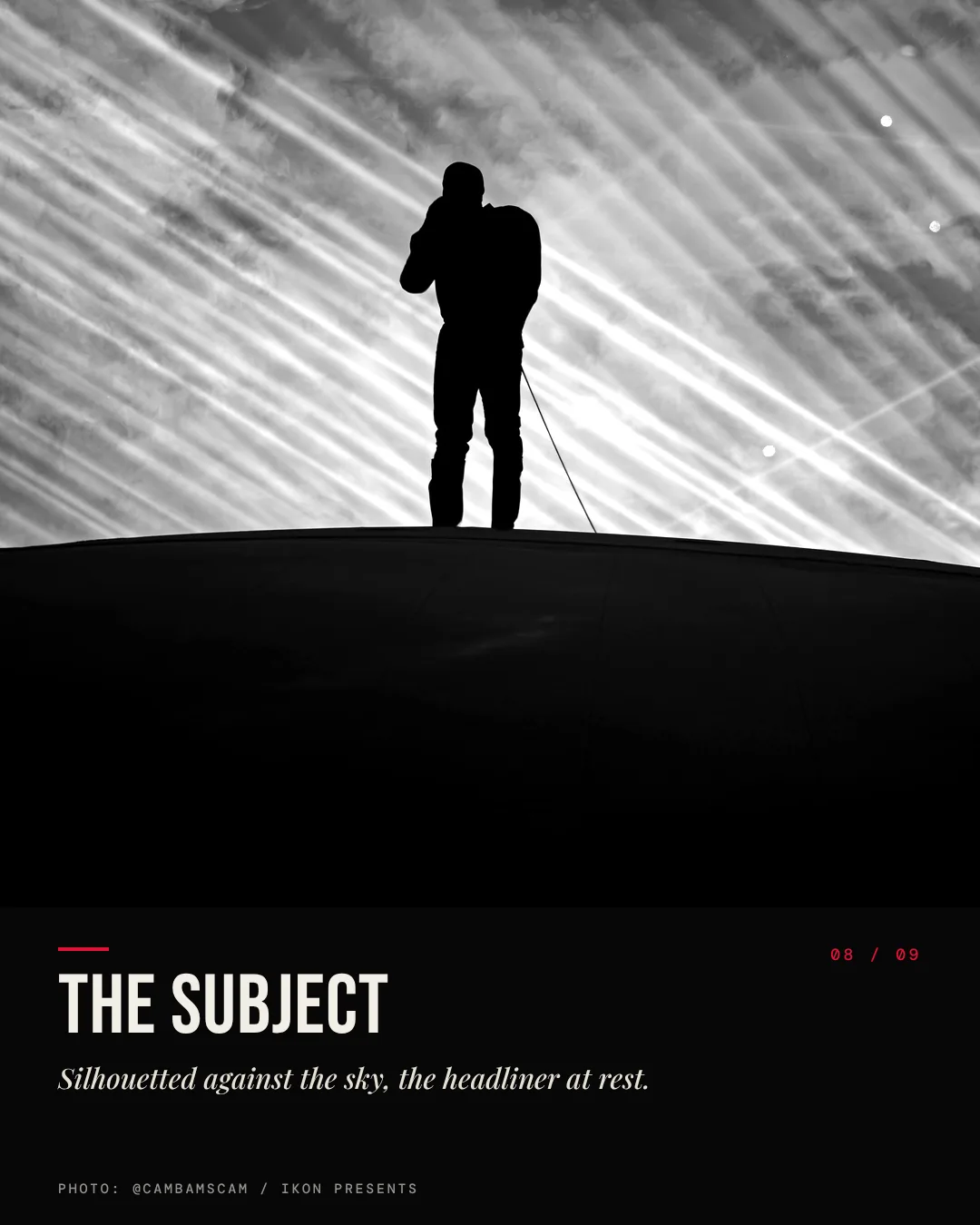
Mid-performance, he pulled out his own camera and started photographing Ye.
Sit with how strange and how human that is. One of the most recognizable artists of his era, standing on a stadium stage in front of tens of thousands of people, chose to spend part of his moment documenting someone else's. Not filming a selfie for his own feed. Not playing to the cameras pointed at him. He turned the lens around and became, for a few seconds, the most famous fan in the building.
It's the image that will outlive the night, and it should. Every stadium show is an exercise in looking: tens of thousands of people pointing their attention at a few. Cudi briefly joined the audience's side of that equation, and in doing so he said more about the two of them than any interview could. Whatever broke between them, the instinct to witness each other survived it. Admiration, it turns out, is harder to cancel than friendship.
For LEDGERA, a publication whose entire premise is the record, there was something almost too perfect about it. Culture isn't only made onstage. It's kept by whoever decides a moment is worth preserving. On this night, one of the people doing the preserving was Kid Cudi.
The Numbers, and What They're For
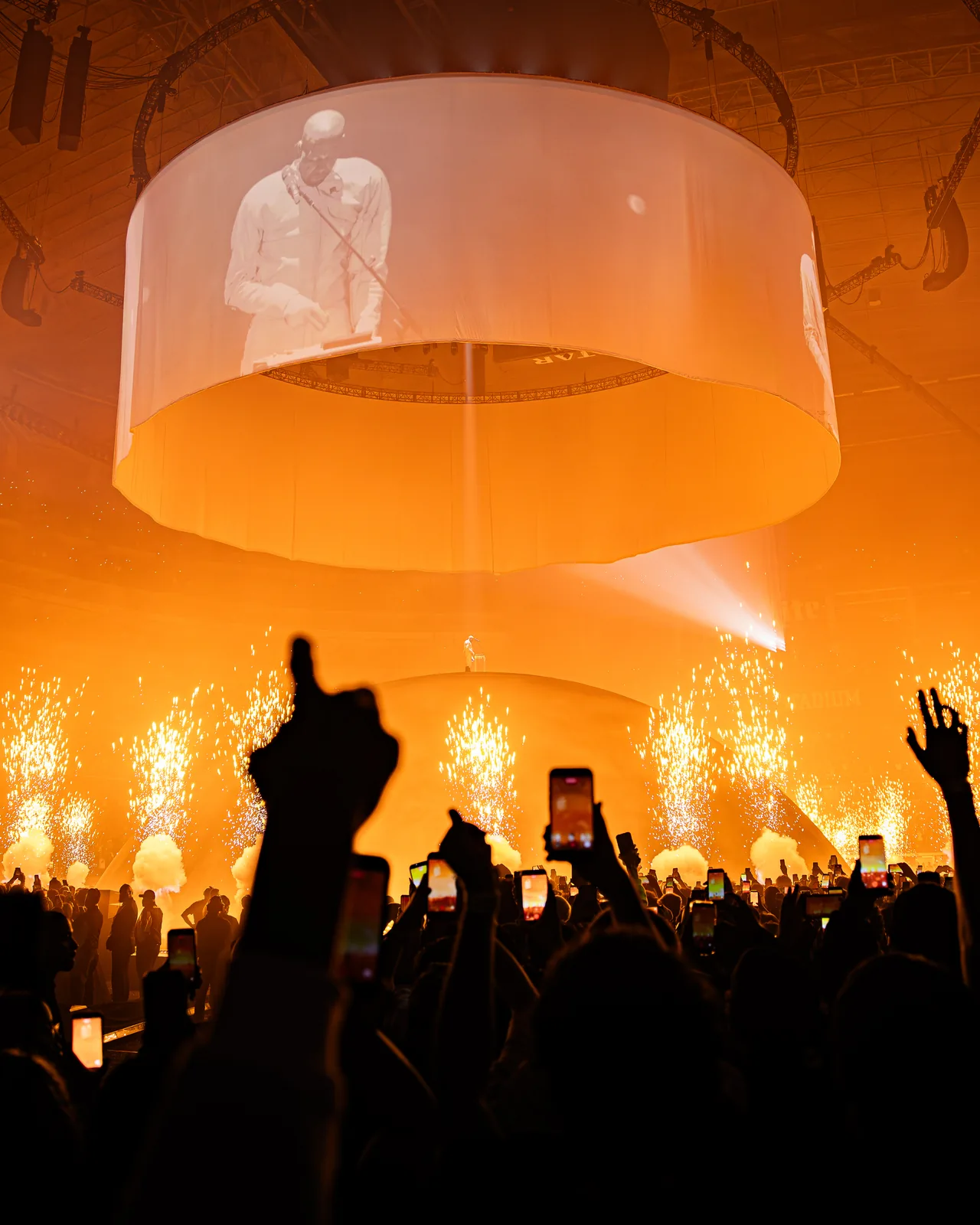
The scale of YE LIVE! is part of the story, and its producer wants that understood. According to IKON Presents, the show sold more than 83,000 tickets and generated more than $16.5 million in gross revenue. IKON Presents also describes it as the highest-attended U.S. rap concert to date. LEDGERA has not independently verified these figures, but even taken at face value, the more interesting point is the model behind them. According to IKON Presents, this is an independently produced stadium run, mounted without the machinery of the traditional touring giants.
That matters beyond one night. If an independent operation can fill a stadium at this level, the gatekeeping logic of the live-music business gets harder to defend. Ye has spent his career insisting he could build outside the system. Whatever you think of the man, this stretch of shows is the most concrete version of that argument he has made in years.
But numbers don't explain why a stadium falls silent, then explodes. People do. The night's real metric wasn't a gross figure. It was the sound that rose when Cudi walked out, and the hush that followed when he lifted that camera.
The Verdict
YE LIVE! was emotional, beautiful and deeply nostalgic, a night that felt like history while it was still happening. The production delivered spectacle on a scale few artists would attempt. Badu brought grace. The catalog brought back years of memories for everyone in the building. But the night belonged to a few seconds that had no setlist slot: a man with a camera, a friend in the frame, and a stadium full of people realizing they were watching something no one had planned.
That's the part worth keeping. That's the record.
Photography: @cambamscam / courtesy of IKON Presents
IN THE FRAME
Selected from the official YE LIVE! photography by @cambamscam.